
Antecolic/Antegastric Roux-en-Y Gastric Bypass
Roux-en-Y gastric bypass (RYGB) is a proven operation for meaningful, durable weight loss and metabolic improvement. One common technical variation is the antecolic/antegastric approach. It routes the intestinal limb in front of the stomach and colon rather than behind them. This configuration streamlines the operation while preserving the benefits patients expect from RYGB.
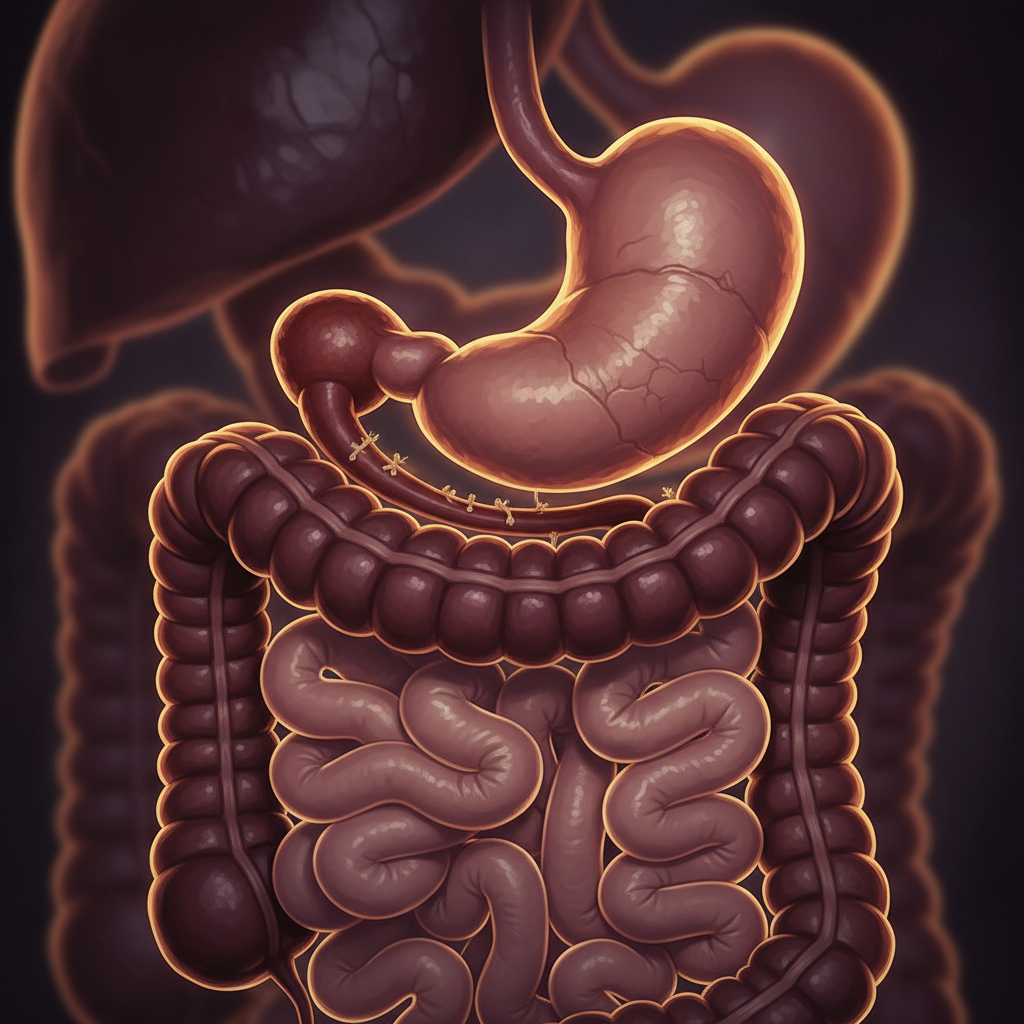
What “Antecolic/Antegastric” Means
- Standard RYGB steps: a small stomach pouch is created and connected to the small intestine (gastrojejunostomy), and the intestines are reconnected downstream (jejunojejunostomy).
- Antecolic/antegastric routing: the Roux limb passes in front of the colon (antecolic) and in front of the stomach (antegastric).
- Why that matters: the intestine does not traverse the transverse mesocolon or behind the stomach, which can simplify the pathway and eliminate a potential site for internal hernia created in retrocolic techniques.
Potential Advantages of the Antecolic/Antegastric Technique
- Simplified anatomy and operative flow
Avoiding a mesocolic window can reduce tissue dissection and may shorten operative time in suitable patients. - Lower exposure to certain hernia sites
By not creating a mesocolic defect, one potential location for internal hernia is removed. Other mesenteric gaps still require meticulous closure. - Broad applicability
Useful in many primary cases and in patients with prior abdominal surgery where additional retrocolic dissection could be less desirable. - Comparable weight-loss and metabolic outcomes
The configuration does not change the core RYGB mechanisms: earlier fullness, modest malabsorption, and favorable hormone shifts that aid diabetes and appetite control.
Note: Vitamin needs, diet progression, and long-term follow-up are the same as with other RYGB configurations.
Considerations and Risks
- Nutrient deficiencies if nonadherent:
Lifelong vitamins and scheduled labs remain essential (multivitamin, B12, calcium citrate with vitamin D, iron as indicated). - Ulcer risk at the pouch–intestine junction:
Higher with tobacco and NSAID use; managed with acid suppression and strict avoidance of triggers. - Dumping symptoms with high-sugar foods:
Prevented by protein-first, lower-sugar eating patterns. - General surgical risks:
Bleeding, clots, leaks, strictures, or internal hernia through other mesenteric defects; meticulous closure and standardized pathways reduce these risks.
Who Might Benefit from Antecolic/Antegastric RYGB
- Patients seeking RYGB with significant GERD, type 2 diabetes, or the need for a robust metabolic effect
- Individuals with prior abdominal surgery where minimizing retrocolic dissection is advantageous
- Candidates who can commit to daily vitamins, scheduled labs, and structured follow-ups
Final technique selection is individualized after a comprehensive evaluation of anatomy, reflux profile, metabolic needs, and surgical history.
Recovery and Long-Term Care (Unchanged from Standard RYGB)
- Diet progression: clear liquids → full liquids → pureed/soft → balanced, protein-first meals in small portions
- Hydration: build to ~64 oz/day by frequent small sips
- Activity: early walking; progress to 30–45 minutes most days plus 2–3 brief strength sessions weekly after clearance
- Follow-ups: about 10 days, 6 weeks, 3/6/9/12 months, then every 6–12 months
- Vitamins/labs: lifelong supplementation with baseline, 3–6 month, 12-month, then annual labs (more often if indicated)
The Tennessee Style Weight Loss Institute Approach
- Procedure-matched planning: technique and limb lengths tailored to your anatomy and goals
- Minimally invasive surgery with ERAS protocols: designed to reduce pain, nausea, clot risk, and length of stay
- Integrated nutrition and lab program: clear supplement protocols, reminders, and timely adjustments
- Access between visits: direct lines for symptom questions so small concerns don’t become big problems
Take the Next Step
If you’re considering Roux-en-Y gastric bypass, we’ll help you determine whether an antecolic/antegastric configuration is appropriate for your case. You’ll leave your consultation with a personalized roadmap, including education, testing, nutrition and vitamin plans, recovery milestones, and your follow-up schedule.
Schedule your consultation with Tennessee Style Weight Loss Institute to move forward confidently with a plan built for durable results.
-Disclaimer-
The information provided on this website is for informational and educational purposes only and should not be considered medical advice. Always consult with a qualified healthcare provider before starting any treatment, medication, or procedure. The content on this website is not intended to replace professional medical guidance, diagnosis, or care. Any treatment or procedure should be discussed directly with a licensed medical professional.